

test series V14
show unpreserved sample of the test series
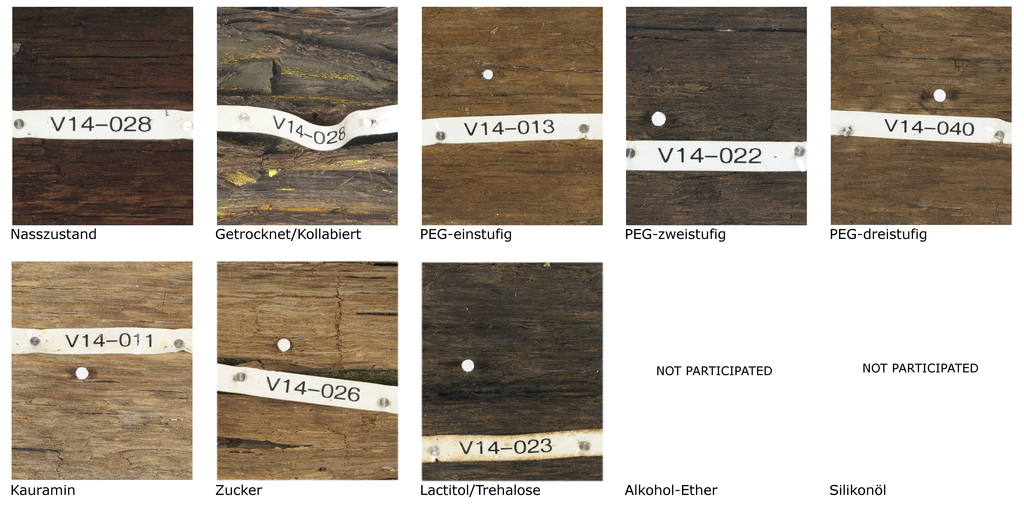
show preserved sample of the test serie
| wood species | Eiche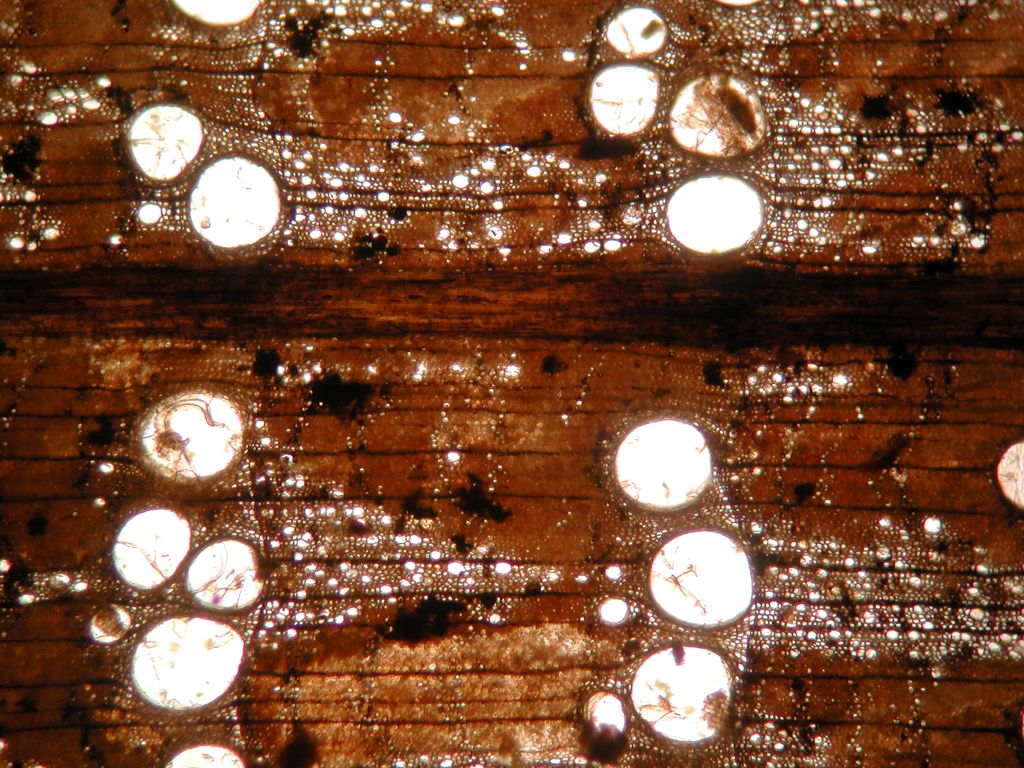
|
|---|---|
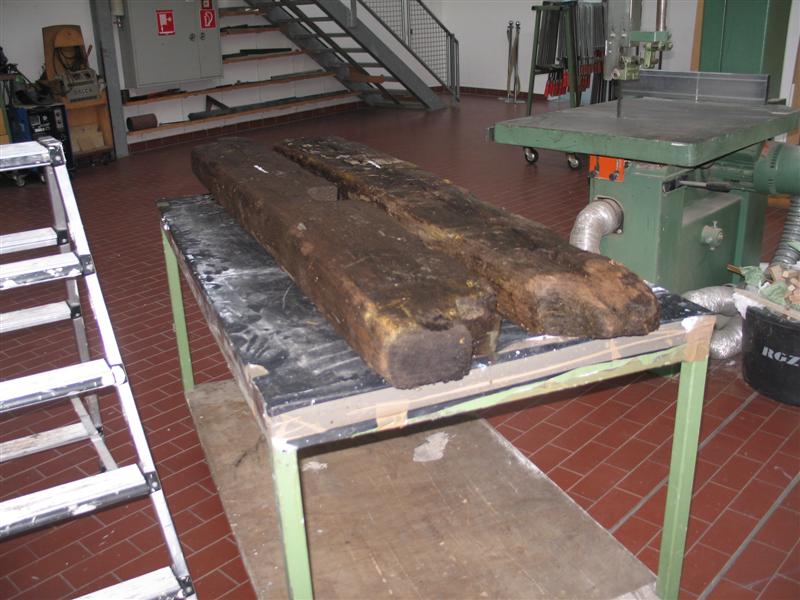
| wooden form | Balken, Konstruktionsholz einer Salzgewinnungsanlage aus Sole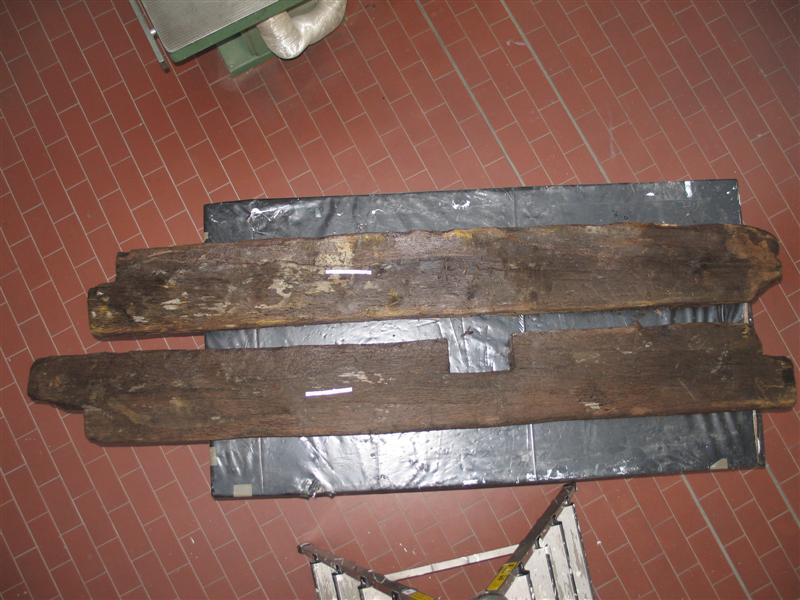
|
| location | Bad Nauheim |
| find enviromen | Stadtgrabung |
| age | Römisch |
| average water content | 214% |
| water content range | 161 - 401 % |
| degree of degradation | 2 |
| cutting/dimensions of the samples | Mittig aufgetrennt und abgelängt (Durchschnittliche Länge x Breite x Höhe : 12 x 12 x 10 cm)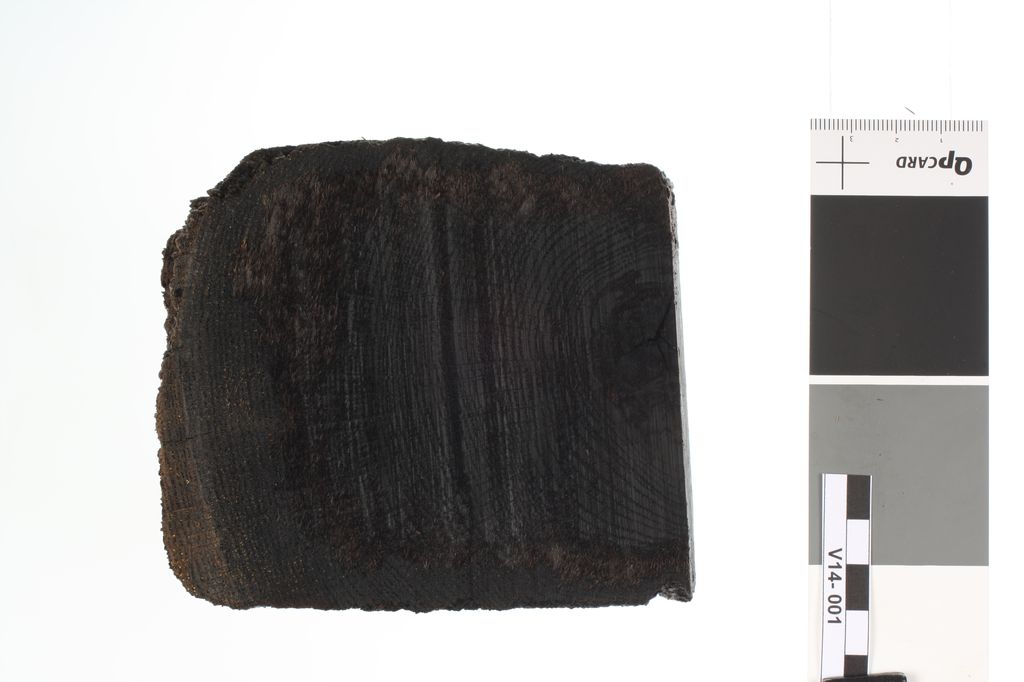
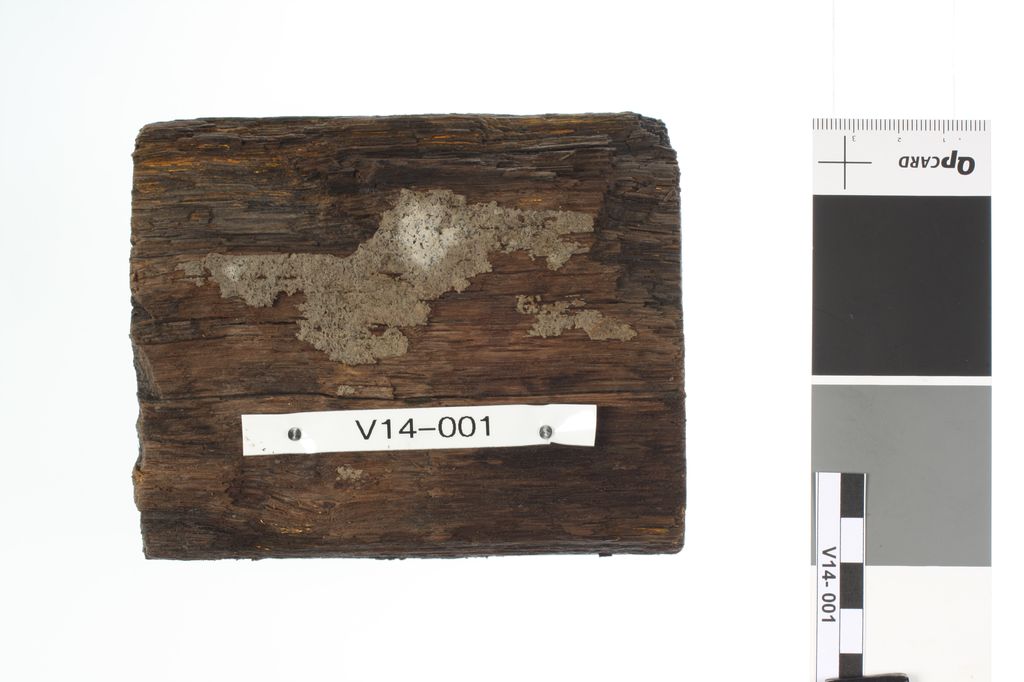
|
| shrinkage behavior |

|
| storage at provide | Wasserbecken |
| interim storage at RGZM | 15 Monate in deionisiertem Wasser mit mehreren Badwechsel |
| color map of the conserved samples |
|
key data of the unpreserved reference sample(s:
| average water content | 228 % | |
|---|---|---|
| shrinkage calculation | from scan data | from caliper data |
| mean volume shrinkage | 45.6 % | 26.4 % |
| average radial shrinkage | 28.5 % | 10.2 % |
| average tangential shrinkage | 42.7 % | 16.8 % |
| average longitudinal shrinkage | 0.6 % | 1.5 % |
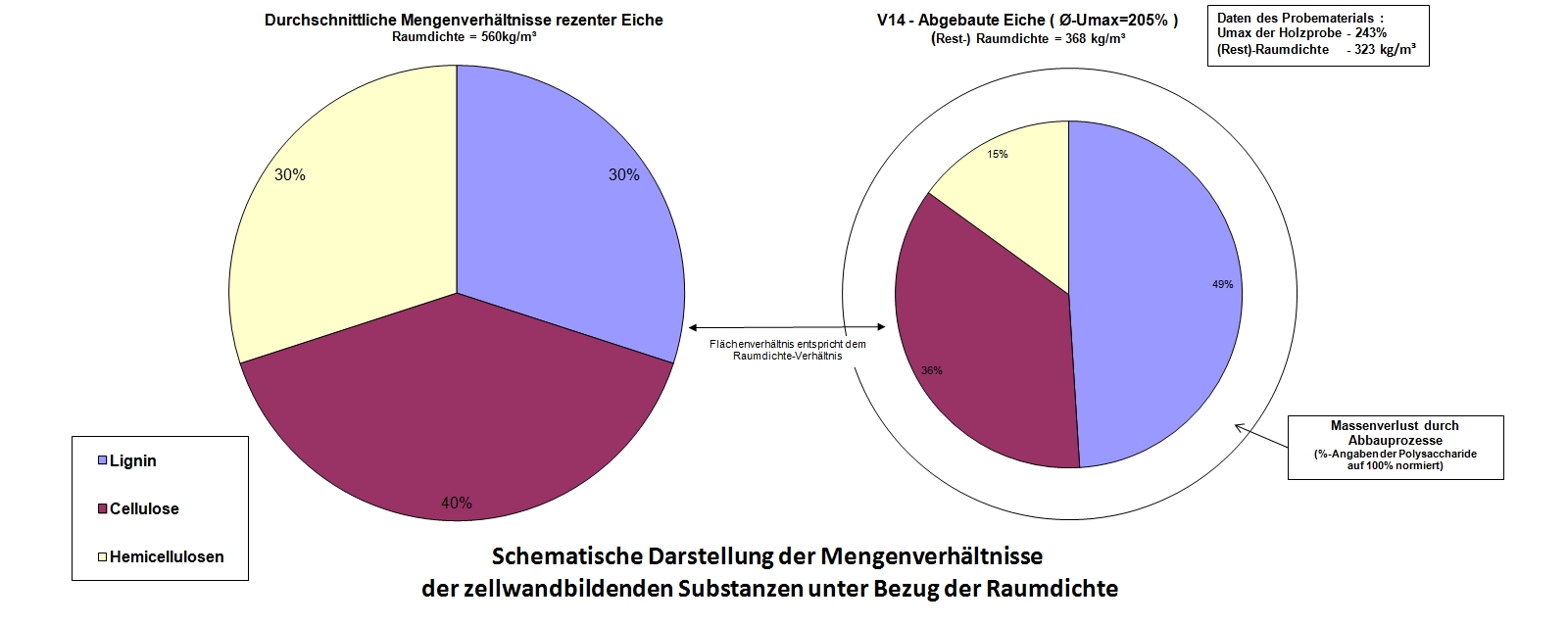
| wood composition (acid hydrolysis) |
 |
|
| The scan data are reference for all ASE calculations due to the higher precision | ||
» back